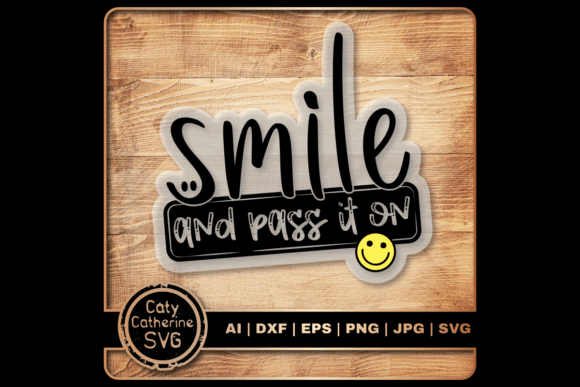
Review: Smile and Pass It On Embroidery Design
As a designer who spends more time staring at stitch simulations than I care to admit, I have learned that not all motivational quotes translate well to thread. Some look cluttered, others lose their charm when scaled down, and many simply do not hold up under the tension of a hoop. When I first pulled up the Smile and Pass It on Motivational Quote design by Caty Catherine, my initial reaction was one of cautious optimism. The phrase itself is warm and universally appealing, but in the world of machine embroidery design, sentiment alone does not guarantee a successful finished product.
I decided to put this embroidery file through its paces, evaluating it not just as a digital asset, but as a tangible component of real-world Crafts and commercial projects. Here is my honest assessment of how this design performs when it leaves the screen and hits the fabric.
First Impressions: Mood and Visual Personality
The immediate appeal of Smile and Pass It on Motivational Quote lies in its simplicity. In an era where overly complex design assets often dominate marketplaces, this piece offers a breath of fresh air. The layout feels balanced, with a typography style that suggests friendliness without sacrificing readability. For an Etsy seller or small shop product creator, this is crucial. You want a design that communicates its message instantly, even from a distance.
The visual personality is uplifting yet grounded. It does not scream for attention; rather, it invites it. This makes it versatile for a wide range of embroidery project types. Whether you are aiming for a modern minimalist aesthetic or a cozy, handmade vibe, this quote fits seamlessly. As a piece of Graphics art, it translates cleanly into vector formats, which is a good sign for scalability before digitizing or using it in cut-file applications.
Real-World Application: From Screen to Stitch
To truly test the viability of this design, I imagined several common scenarios where a personalized gift or custom apparel item would be requested by a client. The most natural fit, in my opinion, is a canvas tote bag design. The sturdy texture of canvas provides an excellent base for the likely stitch types involved—probably a mix of fill stitch for any graphical elements and clean running stitch or satin stitch for the lettering outlines.
I also considered this for sweatshirt embroidery. A crewneck sweatshirt in a neutral tone like heather gray or oatmeal would allow the message to pop without looking too corporate. The "pass it on" aspect of the quote aligns perfectly with the communal, sharing nature of handmade goods. Imagine gifting this on a holiday embroidery project, such as a kitchen towel set or a cozy pillow cover. The sentiment encourages kindness, making it an ideal choice for charity drives, teacher gifts, or community building events.
For those running a craft business, this design could easily become a staple in your commercial embroidery lineup. It is safe enough for corporate bulk orders yet charming enough for boutique baby embroidery items, provided the scale is adjusted appropriately. The key here is versatility. A design that works on a embroidered patch can also work on a cap, doubling your potential inventory without extra design fees.
Technical Considerations and Fabric Compatibility
While the design is aesthetically pleasing, practical application requires attention to detail. One must consider stitch density. If the original file is dense, it may pucker lightweight fabrics. I strongly advise testing this on scrap fabric first, especially if you are working with thin materials like voile or lightweight cotton blends. Using a proper stabilizer is non-negotiable here. A cut-away stabilizer might be best for garments that will undergo frequent washing, ensuring the thread colors remain vibrant and the shape holds true.
Curved surfaces present another challenge. If you plan to use this on caps or hats, check the width of the design against your hoop size. A design that looks perfect flat can distort when wrapped around a curved brim. Additionally, inspect small details. If the font has delicate serifs or tight kerning, ensure your machine can handle the precision. Tiny lettering can sometimes merge together if the fabric texture is too rough or if the needle size is incorrect.
Dark fabrics require special attention to contrast. If you are stitching on navy or black, ensure your thread colors are bright enough to maintain legibility. A poor contrast choice can render the motivational message unreadable, defeating the purpose of the design. I recommend creating black and white mockups to test visibility before committing to thread.
Commercial Viability and Brand Consistency
For digital embroidery file sellers and printable mockup creators, this design offers strong commercial potential. It appeals to a broad demographic, from young adults seeking positive affirmations to older customers appreciating classic kindness messages. This broad appeal increases buyer engagement and can boost trust in your brand. When customers see a clean, well-executed design, they perceive higher value in your handmade product.
However, always confirm licensing before selling finished items. The product description notes that you receive SVG, PNG, EPS, DXF, JPG, and AI files. This suggests the design is primarily intended for cutting machines or graphic use, but many crafters adapt these for embroidery. If you are digitizing this yourself, ensure you have the right to create derivative embroidery works. If it is already digitized, check the specific terms for commercial embroidery use. Clarity here protects your small shop product line from legal issues.
Practical Designer Notes for Best Results
- Test on Scrap Fabric: Always run a test stitch-out to check for registration issues and thread breaks.
- Check Thread Contrast: Ensure the text stands out against the background fabric, especially on dark or patterned materials.
- Review Stitch Density: Adjust density if the fabric is lightweight to prevent puckering or stiffness.
- Confirm Hoop Size: Measure the design dimensions to ensure it fits within your available hoops, especially for caps or small patches.
- Inspect Small Details: Zoom in on the digital file to check for tiny elements that may not stitch out cleanly.
- Use Proper Stabilizer: Match the stabilizer type to the fabric weight and garment usage (washable vs. decorative).
- Verify Licensing: Confirm whether the license allows for selling finished physical goods or if it is for personal use only.
In conclusion, Smile and Pass It on Motivational Quote is a solid addition to any designer’s library. It balances emotional resonance with practical applicability. While it requires standard technical diligence regarding fabric choice and stabilization, its versatility makes it a reliable choice for custom apparel, home decor, and gifts. For the maker looking to spread positivity through their craft, this design delivers both style and substance.