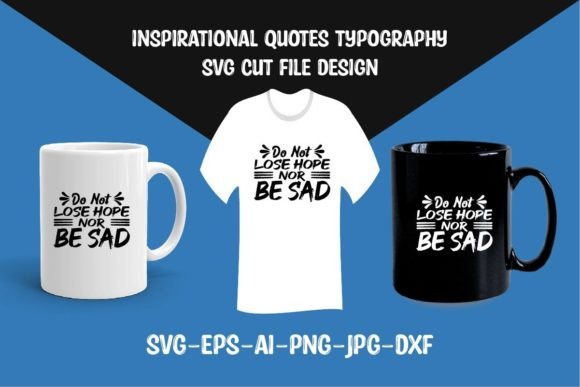
Reviewing the Do Not Lose Hope SVG for Embroidery
As a designer who spends more time staring at stitch simulations than I care to admit, I have learned that not all digital files are created equal. When I first opened the Do Not Lose Hope nor Be Sad SVG Cut File, my initial reaction was one of cautious optimism. The phrase itself carries a heavy emotional weight, often associated with resilience and comfort. For an embroidery professional, the challenge is always translating that sentiment into thread without losing legibility or overwhelming the fabric. This review breaks down how this specific design performs in real-world scenarios, moving beyond the marketing hype to look at the practical realities of stitching it out.
First Impressions and Visual Personality
The layout of this design is clean, which is immediately appealing for anyone working in the Crafts sector. In the world of Graphics, simplicity often translates better to physical media than complexity does. The typography appears balanced, avoiding overly ornate flourishes that can turn into a tangled mess of thread under high-speed machine operation. The mood it creates is calm and reassuring, making it a natural fit for projects intended to provide comfort. Whether you are creating a personalized gift for a friend going through a tough time or stocking your online store with uplifting merchandise, the visual personality here is supportive rather than aggressive. It feels like a design that belongs on soft, tactile items rather than hard, industrial surfaces.
Real-World Application: The Tote Bag Test
To truly evaluate a file, you have to imagine it on a product. I visualized this design on a canvas tote bag design. Canvas is a forgiving medium, but it has a distinct weave that can interfere with small details. Given the likely structure of this quote-based design, I anticipated that the lettering would need to be substantial enough to bridge the gaps in the fabric texture. In this context, the Do Not Lose Hope nor Be Sad SVG Cut File shines because its straightforward lines suggest good coverage. If you were to stitch this onto a tote, using a dense fill stitch for the text would ensure durability. Customers carrying these bags are looking for both style and substance; a well-executed inspirational quote adds value by turning a simple utility item into a statement piece.
Another strong candidate for this design is sweatshirt embroidery. Here, the stakes are higher because the fabric is stretchy and often fleecy. A design like this needs to sit flat without puckering. I would recommend using a cutaway stabilizer to support the weight of the thread. The emotional resonance of the phrase pairs perfectly with the cozy nature of a sweatshirt, making it an ideal product for boutique branding or holiday gifts. When a customer wraps themselves in a garment that literally tells them not to lose hope, the connection between the product and the user deepens. This is where good design transcends aesthetics and becomes an experience.
Navigating Technical Challenges
While the design is promising, there are areas where caution is necessary. Any text-based machine embroidery design requires careful attention to scale. If you attempt to shrink this file for a small hoop, such as on a baby onesie or a cap, you risk losing the integrity of the letters. Tiny serifs or thin strokes can break or merge together, resulting in a blob of thread rather than readable text. For baby embroidery, I would advise testing the design at the smallest intended size on scrap fabric first. Check if the stitch density is too high for delicate knits, which could cause the fabric to pucker or tear.
Curved surfaces present another hurdle. If you are planning to use this on a cap or hat, the center front panel is the only viable location. Even then, you must ensure the design width fits within the curved area without distorting. A running stitch outline might help define the edges on darker fabrics, but if the design relies heavily on solid fills, you need to manage the pull compensation settings in your software. Dark fabrics also pose a visibility issue. If you are stitching light-colored thread on black fabric, any gaps in the stitching will show the background material. Always test your thread colors against your chosen fabric to ensure high contrast and clarity.
Commercial Viability for Etsy Sellers
For the Etsy seller or small shop owner, this file represents a versatile asset. Inspirational quotes are evergreen sellers. They appeal to a broad demographic, from students to seniors. However, standing out in a saturated market requires more than just uploading a file. You need to present the finished product professionally. Using this SVG to create high-quality printable mockup images can help potential buyers visualize the end result. Show the design on a variety of items: a kitchen towel, a pillow cover, or an apron. This demonstrates the versatility of the digital embroidery file and helps customers imagine it in their own homes.
When selling commercial embroidery items, consistency is key. Ensure that every item you produce with this design meets the same standard of quality. Check for loose threads, proper tension, and correct alignment. A single poorly stitched item can damage your brand reputation. Furthermore, always confirm the licensing terms provided by the creator. While the description suggests it is suitable for business use, verifying whether you can sell the physical embroidered items or if there are restrictions on mass production is a crucial step for any creative entrepreneur.
Designer Notes for Best Results
Before you commit to a full production run, take these practical steps. First, always stitch out a test sample on the actual fabric you intend to use. Fabric texture varies wildly, and what looks good on cotton might fail on polyester. Second, inspect the small details. Zoom in on your simulation software to check for potential jump stitches or unnecessary trims that could slow down your machine. Third, consider the hoop size relative to the design. Leaving adequate margin around the design prevents hoop burns and ensures the stabilizer holds firmly.
If you are new to working with text-based designs, start with a simple satin stitch border if the file allows, or add one in your editing software. This can help frame the text and give it a more polished look on items like embroidered patches. Remember, the goal is to create a handmade product that feels premium. The right combination of thread sheen, fabric quality, and precise stitching will elevate the Do Not Lose Hope nor Be Sad SVG Cut File from a simple graphic to a cherished keepsake.
In conclusion, this design offers a solid foundation for a variety of projects. Its strength lies in its emotional clarity and structural simplicity. By respecting the technical limitations of embroidery machines and fabrics, you can leverage this asset to create meaningful, high-quality goods. Whether for a custom apparel line or a one-off gift, the key is in the execution. Take the time to test, adjust, and refine, and you will find that this design holds up well under the needle.