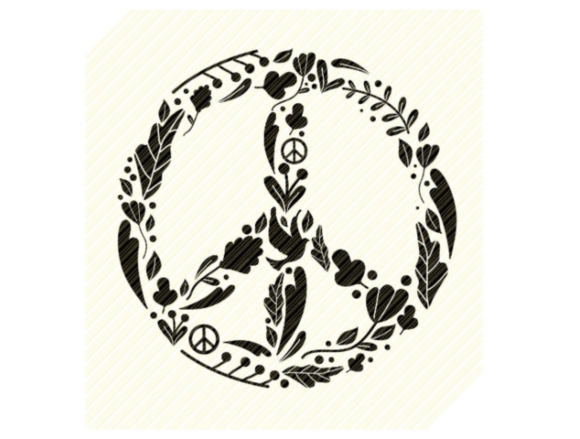
Reviewing the Peace Symbol Graphic for Embroidery
As a designer who has spent countless hours digitizing and testing files for real-world application, I approach every new machine embroidery design with a critical eye. It is not enough for a graphic to look good on a screen; it must translate seamlessly into thread, withstand the tension of the hoop, and appeal to the end customer. Recently, I evaluated the Peace Symbol Peace Sign Graphic, a digital asset marketed toward crafters and small business owners. My goal was to determine if this file holds up under the scrutiny of professional embroidery work or if it remains merely a pretty picture for vinyl cutting.
First Impressions and Visual Personality
The immediate appeal of the Peace Symbol Peace Sign Graphic lies in its universality. The peace sign is an icon that transcends trends, offering a mood of calm, solidarity, and retro charm. Visually, the layout is balanced and symmetrical, which is crucial for embroidery. Asymmetrical or overly complex designs often lead to fabric puckering, but the clean lines of this symbol suggest stability. The theme naturally leans toward kindness and positivity, making it a versatile choice for a wide range of Crafts and Graphics projects.
When I first opened the file, I looked for clarity. In embroidery, negative space is just as important as the stitched areas. This design appears to have well-defined boundaries, which is essential for maintaining shape integrity during stitching. Whether you are using it for a bold statement piece or a subtle accent, the visual personality is approachable and friendly. It does not scream for attention but rather invites a sense of comfort, which is exactly what many customers seek in handmade items today.
Real-World Application: The Tote Bag Test
To truly understand the value of an embroidery file, you must imagine it on a finished product. I visualized this design applied to a canvas tote bag, a staple item for any Etsy seller or boutique owner. Canvas is a sturdy fabric that handles stitch density well, making it an ideal test bed. The peace symbol, centered on the bag, would serve as a focal point without overwhelming the material.
In this scenario, the design’s simplicity works in its favor. A complex applique design might require too much time and material cost for a low-margin item like a tote, but a straightforward symbolic graphic can be stitched quickly while still looking professional. I also considered its use on a sweatshirt. Here, the texture of the fleece adds another layer of complexity. The Peace Symbol Peace Sign Graphic would need to be scaled appropriately to ensure the lines do not get lost in the pile of the fabric. For a sweatshirt embroidery project, I would recommend using a slightly heavier thread weight to ensure the design pops against the textured background.
Navigating Fabric and Hoop Constraints
One of the most critical aspects of reviewing a digital asset is identifying where it might fail. While this graphic is robust, it is not immune to the physical limitations of embroidery machines. For instance, when working with stretchy fabric like jersey knits for t-shirts, the stability of the design becomes paramount. If the stitch density is too high, the fabric may pucker around the circular edges of the peace sign. Conversely, if the density is too low, the fabric might show through the stitches, ruining the solid look of the symbol.
I also considered curved surfaces, such as caps or hats. Embroidering on a cap requires a design that can conform to the curve without distortion. The symmetrical nature of the peace sign is advantageous here, but the size must be carefully managed. A design that is too wide will wrap around the sides of the cap uncomfortably. Therefore, checking the maximum width against your specific hoop size is a non-negotiable step before starting any custom apparel project.
Furthermore, thin fabrics present a challenge. If you are attempting to place this design on a lightweight silk or rayon blouse, the backing and stabilizer choice becomes more important than the design itself. A cut-away stabilizer would likely be necessary to support the stitches and prevent the garment from twisting after washing. For baby embroidery items, where softness is key, ensuring that the back of the stitching is smooth and free of scratchy knots is essential for customer satisfaction.
Commercial Viability and Brand Consistency
For commercial embroidery professionals and small shop product creators, consistency is king. The Peace Symbol Peace Sign Graphic offers a level of recognizability that can enhance brand trust. When customers see a clean, well-executed peace sign, they associate it with quality and care. This is particularly relevant for personalized gift markets, where the emotional connection to the product drives the sale.
However, versatility is where this design truly shines. It fits seamlessly into various niches: from holiday embroidery for peace-themed Christmas ornaments to everyday wear for activists and yogis. As a digital embroidery file, it allows for rapid prototyping. You can test different thread colors to see how they affect the mood. A classic black thread on white cotton conveys stark modernism, while pastel threads on linen evoke a softer, vintage aesthetic. This adaptability makes it a valuable asset in any designer’s library.
Practical Notes for the Embroiderer
Before you commit to stitching this design on a final product, there are several practical steps you should take. First, always test the design on scrap fabric that matches your final material. This allows you to check for thread breaks, tension issues, and overall appearance. Pay close attention to the corners and intersections of the peace symbol, as these are common areas for thread buildup.
- Check Stitch Density: Ensure the density is appropriate for your fabric type. High density on thin fabric causes puckering; low density on thick fabric looks sparse.
- Contrast is Key: Test the design in both light and dark thread colors to ensure visibility. A printable mockup can help visualize this, but physical tests are superior.
- Stabilizer Selection: Use the right stabilizer for the job. Tear-away for stable woven fabrics, cut-away for knits, and water-soluble for delicate materials.
- Licensing Verification: Since this is a digital file, confirm the license terms. Ensure you have the right to use it for commercial purposes if you plan to sell the finished product.
- File Format Compatibility: Verify that the provided formats (such as PES, DST, or JEF) are compatible with your specific machine model.
Final Thoughts on Design Utility
The Peace Symbol Peace Sign Graphic is a solid addition to any collection of design assets. It is not overly complicated, which reduces the risk of stitching errors, yet it carries enough cultural weight to be meaningful. For handmade product sellers, it offers a quick turnaround time without sacrificing aesthetic appeal. Whether you are creating an embroidered patch for a jacket or a subtle detail on a tote bag design, this graphic performs reliably.
Remember, the success of any embroidery project depends not just on the file, but on the execution. By paying attention to fabric choice, stabilizer, and thread quality, you can elevate this simple symbol into a high-value item. For craft business owners, having reliable, versatile designs like this one allows you to focus on marketing and customer service, knowing that the product quality will speak for itself. Always prioritize testing and quality control to maintain the professionalism that buyers expect from your small business merchandise.