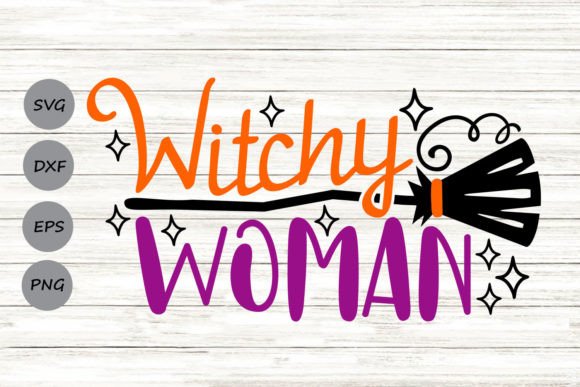
Witchy Woman SVG: A Designer’s Embroidery Review
As an embroidery designer who spends more time staring at stitch simulations than I care to admit, I have learned that not every digital file translates well to thread. We live in an era where Crafts and Graphics intersect constantly, and while a design might look crisp on a screen, the reality of hoop tension and fabric texture can change everything. Recently, I pulled up the Witchy Woman Svg to evaluate its potential for real-world application. This isn’t just about whether the lines are clean; it is about whether this design can hold its own on a sweatshirt, a tote bag, or a boutique patch without turning into a tangled mess of bobbin thread.
First Impressions: Mood and Visual Personality
The first thing that strikes you about the Witchy Woman Svg is its attitude. It captures that specific blend of spooky and chic that defines modern Halloween aesthetics. It is not overly cartoonish, nor is it terrifyingly realistic. Instead, it sits comfortably in the "witchy" vibe that appeals to a broad demographic—from teens wanting edgy apparel to adults looking for subtle seasonal decor. The silhouette suggests movement, likely featuring the iconic witch broom or flowing hair, which presents both an opportunity and a challenge for us as stitchers.
From a layout perspective, the design feels balanced. For embroidery, balance is crucial. If one side is too heavy with detail while the other is sparse, the fabric can pucker during stitching. This Halloween Svg appears to have a central focus, which makes it versatile for various hoop sizes. The visual personality is bold enough to be seen from a distance but detailed enough to reward closer inspection, provided the stitch density is managed correctly.
Real-World Application: The Tote Bag Test
To truly test a design, you have to imagine it on a product. I envisioned using this Witch Svg for a custom embroidered tote bag. Canvas is a forgiving fabric, but it has a distinct texture. When I mentally mapped the Spooky Svg onto a natural cotton canvas, I considered how the thread colors would interact with the background. A classic black thread on natural canvas offers high contrast and readability, which is essential for a design that relies on silhouette and shape.
However, the real test comes with curved surfaces and stretchy fabrics. Imagine this design on a sweatshirt embroidery project. Here, the stability of the garment matters. If the Witch Broom Svg elements are too dense, the sweatshirt fabric might bunch up around the stitches. Conversely, if the design uses too many running stitches without proper underlay, the logo might look flat and unprofessional after the first wash. This is where the quality of the underlying vector file matters. Since these files are ready to be used with cutting machines or programs that support SVG, DXF, PNG, and EPS, the versatility is high, but the responsibility falls on the creator to convert or digitize these paths into efficient machine embroidery instructions.
Navigating Technical Challenges
Every designer knows that tiny details are the enemy of durability. When evaluating the Halloween Quote Svg aspects or any intricate linework within the Witchy Woman Svg, we must be critical. Small, isolated shapes can easily pull out or fray if they are not properly anchored. If you are planning to use this for baby embroidery or items that will undergo frequent washing, you need to ensure that the stitch count supports the longevity of the design.
I always advise checking the design in black and white mockups first. This strips away the distraction of color and reveals the structural integrity of the artwork. Does the Witch Svg rely on thin lines that might disappear when stitched? Are there sharp corners that could cause needle breaks? These are practical questions that separate a hobbyist from a professional Etsy seller. For commercial embroidery, consistency is key. You cannot afford to have one shirt look perfect and the next look sloppy due to poor digitizing decisions based on a complex graphic.
Fabric and Stabilizer Considerations
The choice of stabilizer is non-negotiable when working with detailed graphics. For a tote bag design on heavy canvas, a cut-away stabilizer might be overkill, but a tear-away could leave residue. For stretchy fabrics like those used in custom apparel, a cut-away is essential to prevent the design from distorting over time. The Witchy Woman Svg likely contains areas that require satin stitch for smooth edges and fill stitch for larger bodies of color. Understanding where these transitions happen helps in selecting the right thread weight. Thicker threads might obscure fine details, while thinner threads might not cover the fabric adequately, leading to show-through.
Enhancing Product Value and Brand Consistency
Why does this matter for your craft business? Because perceived value is tied to execution. A well-stitched embroidered patch featuring this design can become a signature item for your small shop product line. It signals to customers that you understand quality. When buyers see clean edges, consistent tension, and thoughtful color choices, their trust in your brand grows. This digital embroidery file serves as the foundation, but your skill in translating it into a finished product is what drives sales.
For holiday embroidery collections, having a versatile design like this allows you to create a cohesive range. You can offer it on pillows, aprons, or even as part of a layered applique design strategy. By keeping the aesthetic consistent across different items, you strengthen your brand identity. Customers who buy a personalized gift from you are not just buying an object; they are buying the assurance that it was made with care and expertise.
Practical Notes for the Modern Maker
Before you commit to a large production run or list this as a new item in your store, take these steps:
- Test on Scrap Fabric: Always stitch out the design on the same type of fabric you intend to sell. Thread behaves differently on polyester blends versus 100% cotton.
- Check Thread Contrast: Ensure your thread colors pop against the fabric. Dark fabrics may require a lighter underlay or specific thread choices to maintain visibility.
- Review Stitch Density: If you are digitizing this yourself from the SVG, keep an eye on density. Too many stitches in a small area can cause puckering and needle heat.
- Confirm Hoop Size: Make sure the design fits comfortably within your standard hoop sizes without requiring excessive re-hooping, which can lead to alignment issues.
- Inspect Small Details: Zoom in on the digital file. Are there stray nodes or overlapping paths that could confuse your machine?
- Verify Licensing: Since these files are marketed for various uses, confirm the license terms before selling finished items. Some creators allow commercial use for physical products but restrict the resale of the digital file itself.
In conclusion, the Witchy Woman Svg offers a strong starting point for seasonal design assets. Its success, however, depends entirely on how well you adapt it to the constraints of embroidery. By respecting the material limits and focusing on clean execution, you can turn a simple graphic into a standout handmade product that resonates with customers and elevates your portfolio.